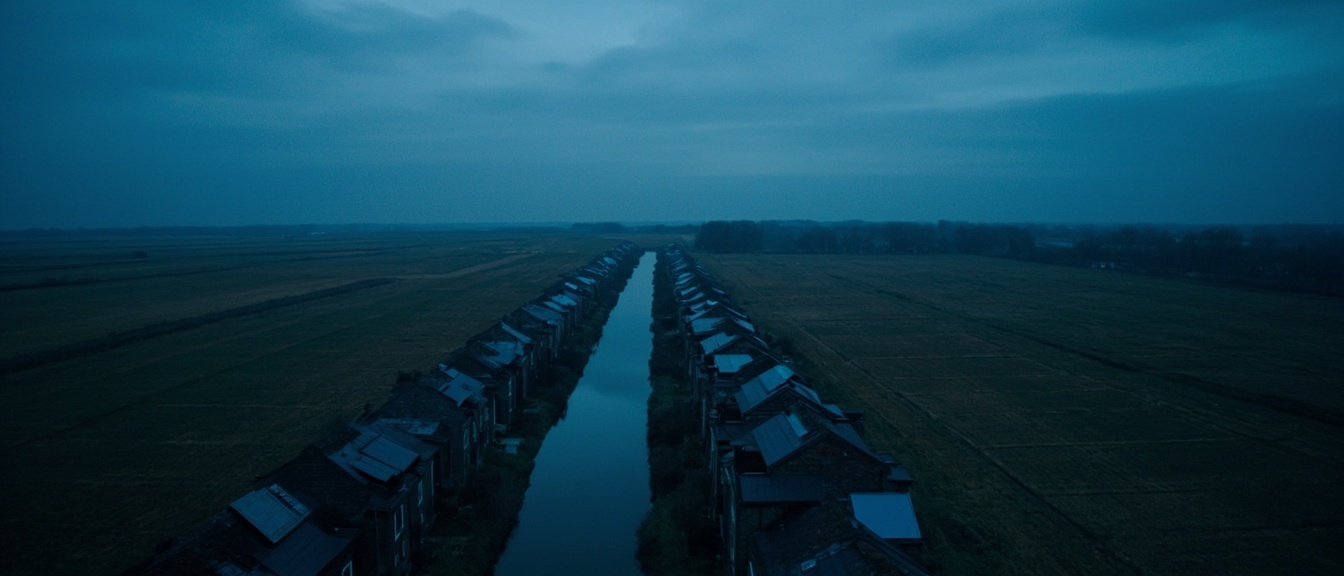
Haarlemmermeer
Your roof is not an average
- per kWp per year facing south
- 850 to 950 kWh
- payback, after net metering ends
- 7 to 9 years
- a condition that applies only here
- cadmium-free
One condition that applies nowhere else in the Netherlands
In July 2025 the Dutch transport inspectorate asked the municipality of Haarlemmermeer to enforce against the glare of a solar park beside Schiphol's Polderbaan runway. Schiphol won: 78,000 of that park's 230,000 panels have to go. Since then the municipality grants permits on the condition that panels are cadmium-free and deeply textured.
For most pitched roofs in Hoofddorp nothing changes: panels lying flush in the roof plane need no permit at all. The condition bites on a flat roof with a tilted array, on a listed building, and anywhere the municipality has to grant something for another reason. So ask which glass the panel in your quote uses. It is a one-sentence question, and installers from outside the municipality rarely see it coming.
Where we work
Haarlemmermeer is reclaimed seabed: flat, open and windy. That is not scenery, it is a line item. On a flat roof here panels sit on ballast rather than bolted into a rafter, and the edges of such an array catch the most wind. That is weight on your roof structure, and it belongs in the quote with the kilos per square metre stated.
- Hoofddorp
- Nieuw-Vennep
- Badhoevedorp
- Zwanenburg
- Vijfhuizen
- Rijsenhout
- Lisserbroek
- Cruquius
What people here ask first
Do I need a permit for solar panels in Haarlemmermeer?
Not for panels lying flat in the plane of a pitched roof: those are permit-free. You do for a tilted array on a flat roof visible from the public road, for a listed building, and in a protected village scape. Wherever the municipality has to grant something, the 2025 condition applies: panels must be cadmium-free and deeply textured.
What happens to net metering, and should I wait for it?
The salderingsregeling — net metering — ends on 1 January 2027 in one step, not in stages. After that what counts is the electricity you use at the moment you generate it; the rest earns a feed-in payment well below your own tariff. Waiting does not help: every year you still net-meter is a year of yield you do not get back. What changes is the arithmetic afterwards, and our calculator already runs it as it will be after 2027.
Roughly what does an installation cost?
A typical ten to twelve panel installation runs between €3,500 and €5,500, including the inverter, the mounting system and the connection. The spread almost never sits in the number of panels but in the panel itself, the inverter, and what the quote leaves out. VAT on residential solar panels is zero per cent, so a quote with VAT added to it is wrong.
Does an east-west roof actually work?
Yes, and in the polder more often than people expect. An east-west array yields about 85 per cent of what the same capacity yields facing south, but spreads that yield across a longer day. Now that net metering is ending, self-consumption counts for more than total generation, and then spreading is worth what the peak costs.
Can I still get connected? The grid here is full.
For feeding back on an ordinary domestic connection there is no queue: you may do that without permission. Where it does bind is an upgrade to three phases or to a larger connection, and that is exactly what a heat pump and an EV charger together often need. Liander has designated Haarlemmermeer a congestion area; count on months rather than weeks.
The roof first, then the number
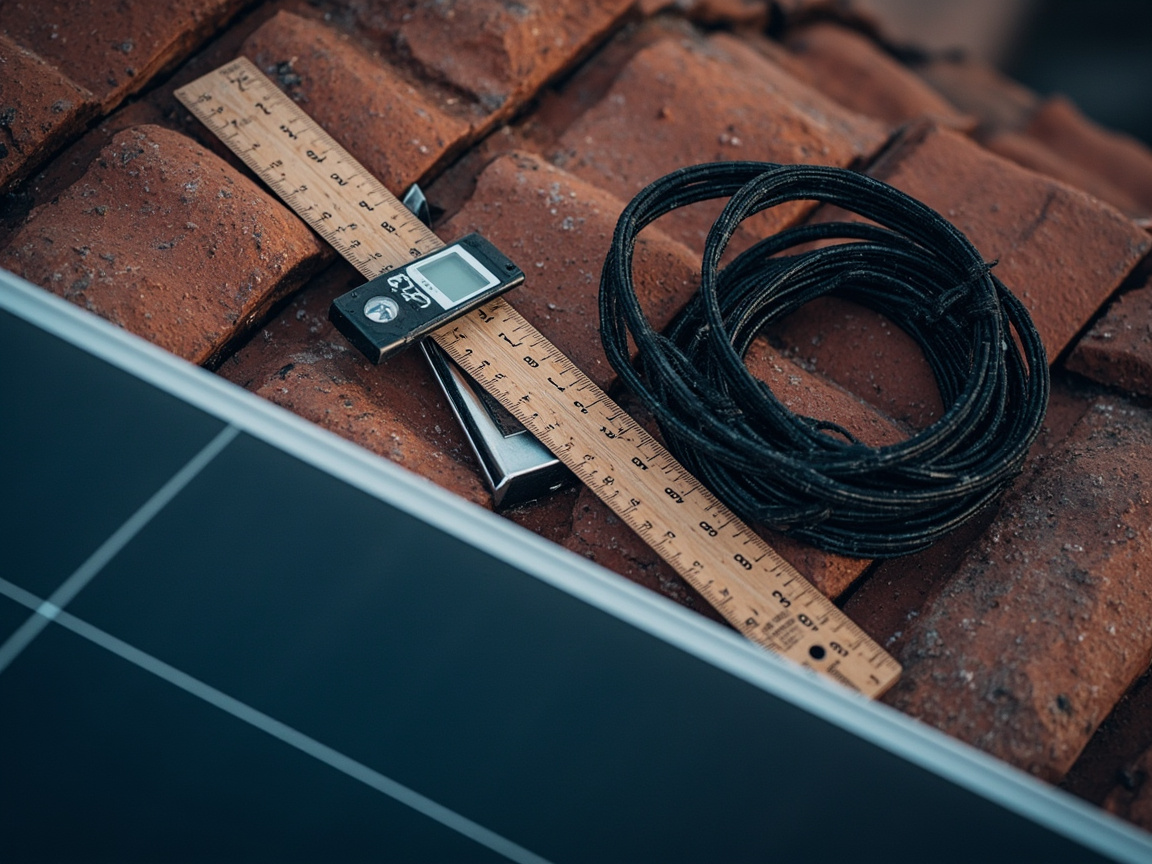
We survey your roof plane, work out the yield with the orientation and the shading you actually have, and itemise the four costs separately. What you do next is up to you.
Book a roof survey